

Stem cell therapy for joint pain may provide mild-to-moderate relief for some people with osteoarthritis, particularly knee osteoarthritis, but it is not a guaranteed cartilage-regrowth treatment. In 2026, the most responsible approach is to view regenerative injections as a minimally invasive option that may help reduce symptoms and improve function: not as a replacement for individualized diagnosis or proven treatments.
If knee, hip, or shoulder arthritis is making it harder for you to walk, sleep, exercise, golf, or enjoy time with family, you deserve clear information before choosing treatment. Here is what Florida patients should know about stem cell injections, PRP, current research, FDA status, and Florida law.
1. What is stem cell therapy for joint pain?
Stem cell therapy for joint pain uses human cells, tissues, or cellular products intended to support the body’s healing response. In joint care, these products may be injected into or around a painful joint, such as the knee, hip, or shoulder.
The proposed benefits may include:
- Supporting a healthier inflammatory environment
- Reducing joint pain and stiffness
- Improving mobility and physical function
- Helping you participate more comfortably in physical therapy and daily activities
- Providing a non-surgical alternative when conservative care has not been enough
Osteoarthritis occurs when the protective cartilage in a joint gradually wears down. This can cause inflammation, bone-on-bone irritation, reduced range of motion, and pain during movement. Stem cell therapy for joint pain is designed to influence the local healing environment, but current evidence does not prove that an injection reliably reverses advanced cartilage loss.
At Family Spine & Pain Care Institute, regenerative medicine is considered as part of a personalized, non-surgical pain management plan. A comprehensive evaluation is important because joint pain may also come from bursitis, tendon injury, nerve irritation, referred spine pain, or another condition.

2. How is stem cell therapy different from PRP?
PRP, or platelet-rich plasma, is created from a sample of your own blood. The blood is processed to concentrate platelets and growth factors, which are then injected into the painful area.
Stem cell therapy for joint pain uses a different type of regenerative product. Depending on the treatment, the source may involve adult cells, placental or perinatal tissue, or another human cellular or tissue-based product. The specific source, preparation, processing, and intended use should always be explained before treatment.
| Treatment | What is used? | Common discussion points |
|---|---|---|
| PRP therapy | Concentrated platelets from your own blood | Autologous, meaning it comes from your body; evidence varies by condition and preparation |
| Stem cell therapy | A cellular or tissue-based product from a disclosed source | Product quality, regulatory status, cell viability, and evidence must be carefully reviewed |
Neither treatment should be promoted as a guaranteed cure. Your physician should discuss expected benefits, limitations, risks, alternatives, and whether the treatment fits your diagnosis.
Learn more about PRP therapy at Family Spine & Pain Care Institute and regenerative medicine options.
3. What does the science say about osteoarthritis?
Research on stem cell therapy for joint pain is developing, but it remains uneven. The strongest body of research involves the knee. Studies involving hip and shoulder osteoarthritis are fewer, and conclusions are more limited.
Recent reviews of randomized clinical trials suggest that:
- Knee injections may produce modest improvements in pain and function at approximately 6 to 12 months.
- Some studies report benefits lasting longer, but results vary substantially.
- Much of the reported improvement may be related to the injection experience, patient expectations, rehabilitation, and other contextual effects.
- Studies use different cell sources, doses, processing methods, and comparison injections, making results difficult to compare.
- The evidence is generally considered low-certainty or uncertain.
- Long-term safety and disease-modifying effects require additional research.
A 2025 review indexed in PubMed reported that the benefits of mesenchymal stem cell injections for knee osteoarthritis appear modest and that uncertainty remains regarding long-term structural changes.
The practical takeaway is important: stem cell therapy for joint pain may help symptoms for selected patients, but it should be viewed as an adjunct treatment, not a promise that damaged cartilage will grow back. A successful outcome should be measured by meaningful goals such as walking farther, climbing stairs, sleeping more comfortably, or returning to activities you value.
4. Can stem cell injections treat knee, hip, and shoulder pain?
Knee osteoarthritis
The knee has the most research behind regenerative injections. Patients with mild-to-moderate osteoarthritis may be more likely to discuss an injection than patients with severe joint destruction, although candidacy depends on your complete medical evaluation.
Treatment may be considered when pain continues despite:
- Activity modification
- Physical therapy or home exercises
- Weight-management strategies when appropriate
- Medication or topical treatments
- Other injections or non-surgical options
Hip arthritis
Hip pain may come from the joint itself, the surrounding tendons, the bursa, or the lower back. Because the hip is deeper than the knee, accurate placement and correct diagnosis are especially important. Stem cell therapy for joint pain should not be considered until your physician confirms the likely pain generator.
Shoulder arthritis and related conditions
Shoulder pain can involve arthritis, rotator cuff disease, bursitis, impingement, or adhesive capsulitis. Regenerative injections may be discussed in selected cases, but evidence for shoulder osteoarthritis is not as established as evidence for knee osteoarthritis.
Family Spine & Pain Care Institute also evaluates and treats knee pain, hip pain, and shoulder pain using individualized, minimally invasive care plans.
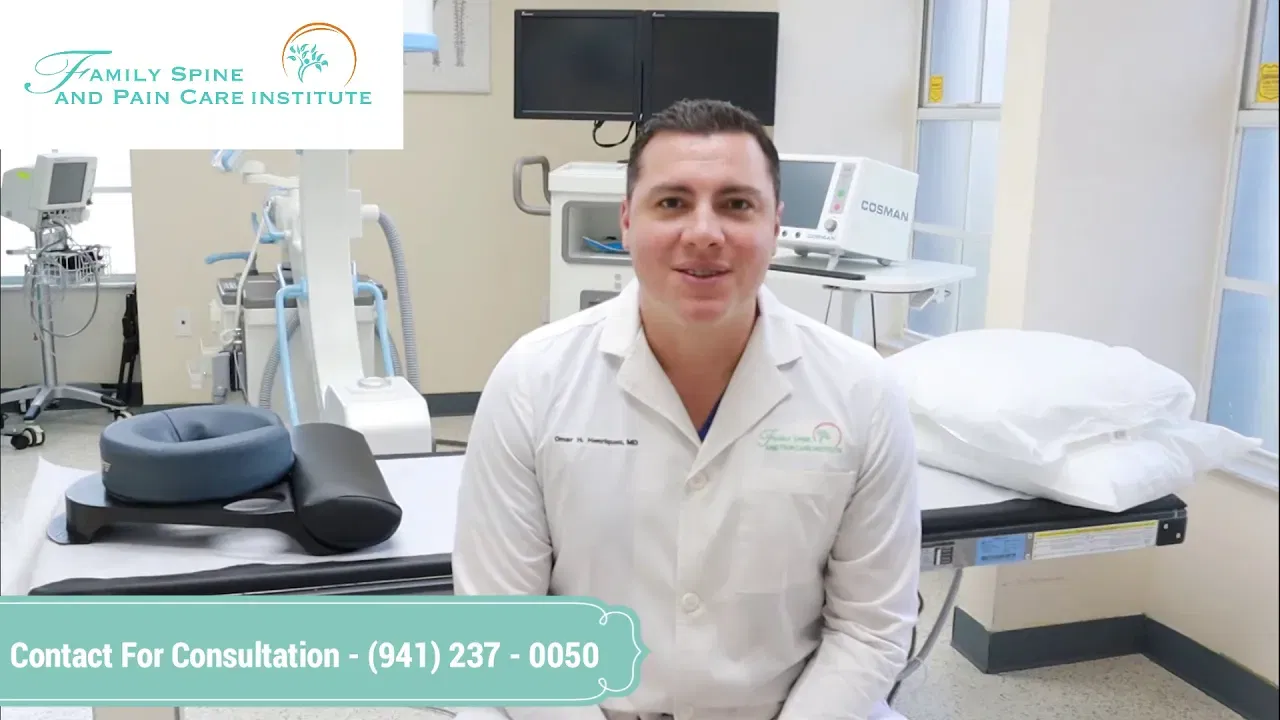
5. What should you expect from the procedure?
When appropriate, joint injections are performed as outpatient procedures. Depending on the joint and the physician’s plan, ultrasound guidance may help visualize soft tissues and guide needle placement. Fluoroscopic live X-ray guidance may also be used for precise access in selected procedures.
A typical process may include:
- Reviewing your symptoms, medical history, medications, and prior treatments.
- Performing a physical examination and reviewing imaging when necessary.
- Confirming whether arthritis is the primary source of pain.
- Discussing the product, expected results, risks, alternatives, and cost.
- Completing required informed consent.
- Performing the minimally invasive injection in an outpatient setting.
- Following a recovery and activity plan designed for your condition.
Temporary soreness, swelling, or increased pain may occur after an injection. You should receive specific aftercare instructions and know when to contact the office. A procedure may be completed quickly, but improvement: if it occurs: may take time and is not guaranteed.
6. Is stem cell therapy FDA-approved for arthritis?
No. According to the FDA’s consumer alert on regenerative medicine products, no regenerative medicine product is FDA-approved to treat orthopedic conditions such as osteoarthritis, hip pain, knee pain, or shoulder pain.
The FDA states that the limited stem cell products approved in the United States are blood-forming stem cell products derived from umbilical cord blood for certain blood and immune-system disorders. That approval does not extend to arthritis or joint pain.
This distinction matters. A product may be processed in an FDA-regulated facility, listed in a database, or used by a licensed physician without being FDA-approved for the treatment of osteoarthritis. Patients should be cautious about claims promising guaranteed cartilage restoration, permanent relief, or a cure.
7. What does Florida Senate Bill 1768 require?
Florida Senate Bill 1768, effective July 1, 2025, created requirements for certain stem cell therapies performed by licensed Florida physicians. The law allows a physician to perform a non-FDA-approved stem cell therapy for joint pain when it is within the physician’s scope of practice and relates to orthopedics, wound care, or pain management.
Among other requirements, the law addresses:
- Use of products from facilities registered and regulated by the FDA
- Certification or accreditation of the source facility
- Documentation of post-thaw cell viability
- Compliance with applicable current good manufacturing practices
- A required advertising notice stating that the therapy has not yet been approved by the FDA
- Signed informed consent before treatment
- Discussion of the treatment’s nature, anticipated results, risks, benefits, alternatives, and non-treatment
Florida law does not make stem cell therapy FDA-approved. It also does not guarantee that a treatment will work for every patient. Ask questions, request clear documentation, and consult your primary care provider before making a decision.
Who may be a candidate for treatment?
You may be able to discuss regenerative medicine if you have persistent joint pain and:
- Imaging and examination support osteoarthritis or another appropriate condition
- Symptoms interfere with mobility or quality of life
- Conservative treatments have not provided enough relief
- You understand the treatment’s experimental or non-FDA-approved status for arthritis
- You have realistic expectations about symptom improvement
- Your physician determines that potential benefits outweigh the risks
Stem cell therapy may not be appropriate for everyone. Infection, certain medical conditions, medication use, advanced joint damage, or an incorrect pain diagnosis may change the treatment recommendation.
Where can Florida patients discuss regenerative joint care?
Family Spine & Pain Care Institute provides compassionate, non-surgical pain care for patients in Venice, Port Charlotte, and surrounding areas of Sarasota County and Charlotte County.
Venice office
1505 S Tamiami Trail, Suite 405
Venice, FL 34285
Venice procedures location
1525 S Tamiami Trail, Suite 601
Venice, FL 34285
Port Charlotte office
3390 Tamiami Trail, Suites 201 & 202
Port Charlotte, FL 33952
Office hours: Monday–Friday, 8:00 a.m.–5:00 p.m.
Phone: 941-237-0050
The practice accepts many Medicare, Medicaid, and commercial insurance plans, and is accepting Workers’ Compensation cases. However, regenerative procedures may have different coverage rules. Review your benefits and call the office for help understanding your options through the insurance information page.
Q&A: Stem Cell Therapy for Joint Pain
Is stem cell therapy a cure for arthritis?
No. Current evidence does not establish stem cell injections as a cure or guaranteed cartilage-reversal treatment for osteoarthritis. Some patients may experience symptom relief, but results vary.
Is PRP better than stem cell therapy?
Neither is universally better. PRP and stem cell products are different treatments, and the right option depends on your diagnosis, health history, goals, evidence, risks, and cost.
How long does recovery take?
Joint injections are generally outpatient, and many patients can return home the same day. Your activity restrictions and recovery timeline depend on the joint treated and your physician’s instructions.
Will insurance cover stem cell therapy?
Coverage varies. Because stem cell therapy for arthritis is not FDA-approved, it may not be covered like standard pain treatments. Call 941-237-0050 to discuss insurance and payment questions.
Should I consider stem cell therapy in Venice, Port Charlotte, or Sarasota?
Start with a medical consultation rather than a sales promise. A board-certified pain physician can evaluate your joint, explain alternatives, and help you decide whether regenerative care is reasonable for your situation.
If arthritis pain is limiting your mobility or quality of life, you do not have to navigate your options alone. Family Spine & Pain Care Institute provides compassionate, minimally invasive pain care focused on helping you return to daily activities with a personalized plan.
👉 Call Family Spine & Pain Care Institute at 941-237-0050 or schedule an appointment online.