
Yes, many cases of golf-related back pain can be managed without surgery. If your back stiffens during your swing or aches after a round, back pain treatment without surgery in Venice, FL may include simple activity changes, a personalized exercise plan, and, when clinically appropriate, minimally invasive pain procedures.
October’s cooler weather brings more Southwest Florida golfers back to the course. But after a quieter summer, jumping straight into long rounds or full-power swings can strain your back. The goal is not to promise instant, pain-free golf; it’s to identify what’s causing your symptoms and help you return to activity safely.
1. Warm up before your first swing
A few minutes of preparation can help your body transition from everyday movement to golf’s repeated rotation. Mayo Clinic recommends a light warm-up before golf stretches and a gradual start to play.
Try this before a round:
- Walk briskly for 5–10 minutes.
- Do gentle trunk rotations, hip hinges, leg swings, and shoulder movements.
- Rehearse several easy swings, then gradually increase your range and speed.
- Stop if a movement produces sharp pain or symptoms traveling down your leg.
Avoid forcing a stretch or starting with maximum-effort drives. For more guidance, see Mayo Clinic’s golf warm-up advice.

2. Build strength gradually, and respect a layoff
Golf asks your trunk, hips, and legs to coordinate through repeated rotation. If you have been less active, weakness or stiffness may make a round feel demanding. A physical therapist or clinician can help you choose movements that fit your symptoms and current ability.
A gentle starting routine may include:
- Bridges to work the hips and glutes.
- Modified planks or side planks to build trunk stability.
- Rows to strengthen the upper back and support posture.
- Short walks or practice sessions, increasing time and intensity gradually.
Start with a manageable amount and stop or modify any exercise that significantly worsens your pain or brings on new leg symptoms. General exercise is commonly recommended as part of nonsurgical care for many types of low back pain; see the American College of Physicians’ guidance.
3. Adjust your game while your back recovers
You may not need to give up golf, but you might need to change how much you play while symptoms settle. Try fewer holes, shorter practice sessions, more breaks, and swings that stay within a comfortable range. A golf professional can help review your setup and swing, while a clinician can assess whether pain or restricted mobility is affecting your movement.
Consider these practical adjustments:
- Use a cart if walking increases your symptoms.
- Avoid practicing through pain that worsens with each swing.
- Take breaks between buckets or groups of holes.
- Check that your clubs and setup are comfortable for your height and mobility.
Golf-related back pain can have several contributors; it is not always caused by poor swing mechanics. If pain persists, radiates into your leg, or keeps returning, an evaluation can help clarify the cause. Learn more about lower back pain and treatment options.
4. Get an assessment before choosing a treatment
Back pain can come from different sources, including muscle strain, disc irritation, arthritis, or nerve compression. The right treatment depends on the diagnosis, your health history, and how your symptoms affect daily life, not simply on the fact that you play golf.
If you are searching for back pain treatment without surgery in Venice, FL, a pain specialist can discuss whether conservative care or a procedure is appropriate. At Family Spine & Pain Care Institute, physicians use imaging such as fluoroscopy when indicated to guide certain procedures. Live X-ray guidance helps the physician visualize instrument placement; it does not guarantee a particular outcome.
5. Ask whether a minimally invasive option fits your diagnosis
When at-home measures and other appropriate conservative care are not enough, a physician may discuss minimally invasive options. These treatments are not interchangeable, and none is the right choice for every golfer.
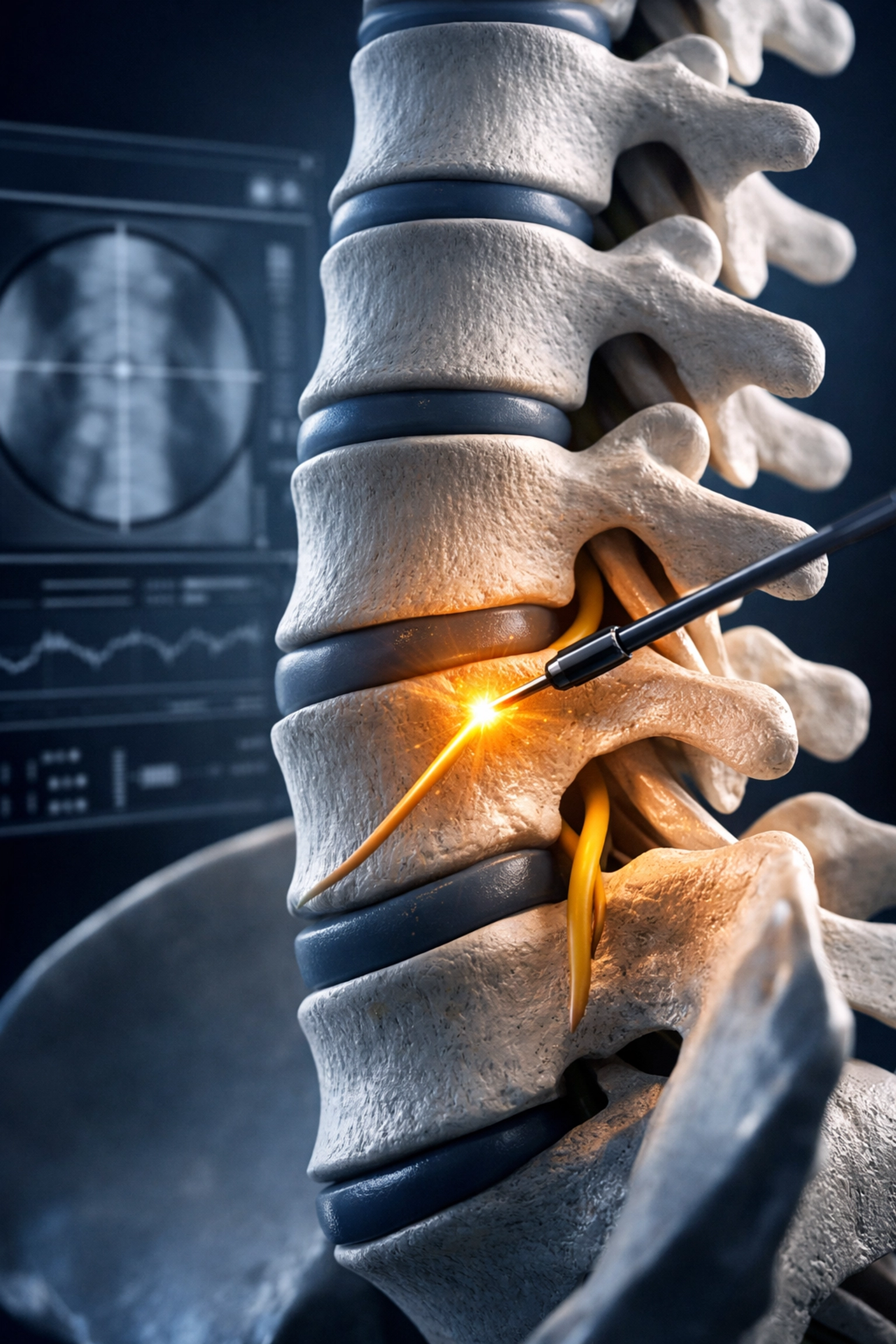
- Epidural steroid injection: May be considered for certain types of irritated or compressed spinal nerves, especially when pain radiates into the leg. It is not a routine treatment for every type of back pain. See our lower back pain information.
- Radiofrequency ablation (RFA): Uses controlled heat to interrupt selected pain signals. It may be considered for some people with persistent facet-joint pain after evaluation and diagnostic testing. Read what to know about radiofrequency ablation.
- Nerve blocks: Deliver medication near specific nerves and may help with diagnosis or temporary symptom relief, depending on the type of block and pain source.
- Platelet-rich plasma (PRP): Uses a sample of your own blood, processed to concentrate platelets. Evidence and appropriate uses vary by condition; ask your physician about the evidence for your specific diagnosis, alternatives, costs, and risks. Learn about PRP therapy.
Many procedures are outpatient, but recovery guidance depends on the treatment and your individual situation. Your care team will explain when to resume normal activities; some patients may be advised to take it easy for 24–48 hours. Do not assume you can return to a full round immediately. The plan should prioritize safe recovery and gradual mobility.
At Family Spine & Pain Care Institute, patients seeking back pain treatment without surgery in Venice, FL can discuss a personalized plan with a pain physician. The focus is on understanding your symptoms and considering appropriate non-surgical options, not promising a specific result or timeline.
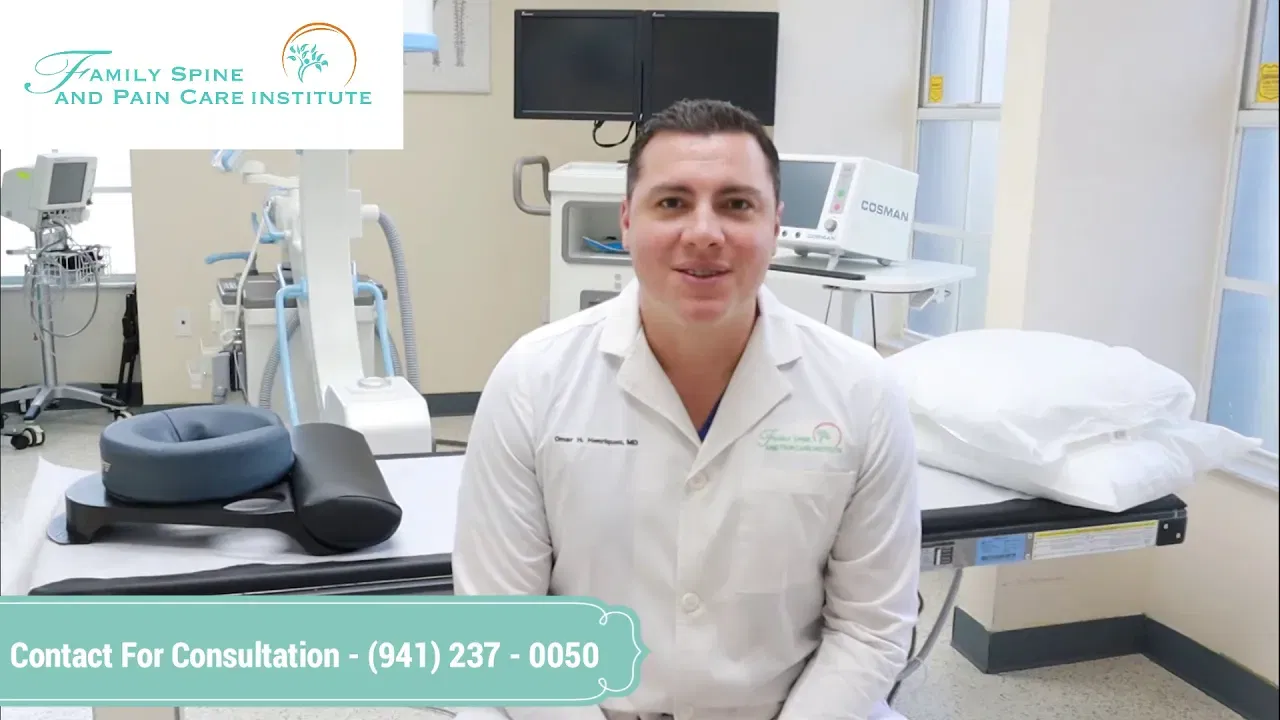
When should you seek medical care for golf-related back pain?
Make an appointment if pain persists, repeatedly returns, limits your sleep or daily activities, or travels from your back into your leg. Seek urgent medical attention for new bowel or bladder problems, numbness around the groin or saddle area, significant or worsening leg weakness, or severe symptoms after an injury.
If you’re weighing back pain treatment without surgery in Venice, FL, an assessment can help determine whether a procedure is appropriate or whether another approach should come first. A clinician may also advise whether imaging is needed based on your symptoms and examination.
Q&A: Golf and back pain
Q: Can I keep golfing if my back hurts?
A: It depends on the cause and severity. Consider pausing or reducing play if swings worsen your pain, and seek medical advice for persistent or radiating symptoms.
Q: Does golf-related back pain always require surgery?
A: No. Many cases can be managed with nonsurgical care, but the right plan depends on the diagnosis and your individual health.
Q: How soon can I golf after an injection or RFA?
A: Timing varies by procedure and patient. Follow your physician’s instructions; you may be advised to avoid strenuous activity for a short period before returning gradually.
Q: Is PRP a proven treatment for every kind of back pain?
A: No. Evidence and appropriate uses vary. Discuss the potential benefits, uncertainties, risks, and costs with your physician.
Plan your next step toward comfortable movement
If back pain is keeping you from enjoying golf season, you do not have to sort through treatment options alone. Family Spine & Pain Care Institute provides personalized pain care for patients in Venice, Port Charlotte, and the greater Sarasota area, with a new Sarasota location coming soon. If you are considering back pain treatment without surgery in Venice, FL, call to discuss an evaluation and possible next steps.
Venice office: 1505 S. Tamiami Trail, Suite 405, Venice, FL
Venice procedure location: 1525 S. Tamiami Trail, Suite 601, Venice, FL
Port Charlotte office: 3390 Tamiami Trail, Suites 201 & 202, Port Charlotte, FL
Hours: Monday–Friday, 8:00 a.m.–5:00 p.m.
Phone: (941) 237-0050
👉 Contact Family Spine & Pain Care Institute to schedule a consultation
This article is for general educational purposes and is not a substitute for personalized medical advice, diagnosis, or treatment.